
Power Switching Selection Hub

Narrow a 200a relay or a high voltage relay by load current, switching voltage, contact form or application — before you open a datasheet. This hub decodes the numbers that actually govern continuous versus peak switching on the YE706, and shows where each rating belongs in your cabinet.

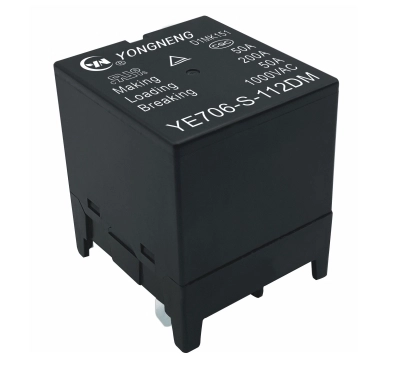
New Energy 200A Relay YE706

Selection matrix: circuit role first, part number second

Five common circuit locations, the role the relay plays in each, and the ratings you must confirm before you commit to a model.

Application Circuit role Type to consider Ratings to verify
Solar / PV inverter DC-link and output switching High-current power relay, 1A contact Rated vs. max switching current; max switching voltage
ESS / BMS Battery string isolation and precharge Sealed power relay for enclosure protection Coil-to-contact dielectric strength; sealed vs. open type
Power distribution panel Main load switching inside a cabinet Relay with a modular panel footprint Contact resistance; operate / release time; max switching power
Industrial power conversion Inverter / rectifier output control Shock-resistant relay for vibration-prone mounts Shock resistance; mechanical endurance
Test equipment Controlled load switching on a bench Relay with low, stable contact resistance Contact resistance stability; insulation resistance; electrical endurance

One number needs a conversation: coil-to-contact dielectric strength

The YE706 page shows two figures for isolation between coil and contacts. They describe the same interface at two different build levels, so neither should be read as a blanket statement.

Features block

1KV optional (between coil & contacts)

Presented as an optional configuration on the page.

Characteristics table and descriptive copy

5,000VAC, 50/60Hz, 1 min.

The standard quoted value for the coil-to-contact interface.

Treat the two figures as standard versus optional build, and confirm the actual value on the drawing and the quote before design freeze — confirm with us before design freeze.

Application fit checks

Each card pairs one product fact with the decision it should trigger. If the decision does not land in your favour, the part is wrong for that slot — not the other way round.

Solar / PV inverter

Switching envelope

Product fact: max switching voltage 1000VAC, max switching power 220,000VA.

Buyer decision: check the DC-link and open-circuit voltage at the coldest operating point, then confirm that the peak current at switch-on stays under 200A. If your envelope sits close to the corner, ask for the switching rating to be confirmed on the drawing.

ESS / BMS

Enclosure and climate

Product fact: sealed type and open type available; ambient tolerance −40°C to +105°C.

Buyer decision: choose sealed where the battery enclosure can see condensation, dust or washdown; choose open where the cabinet already provides climate control and you want the simpler assembly. Check the +105°C ceiling against your hottest internal air, not your room temperature.

Power distribution panel

Panel real estate and feeder sizing

Product fact: 1A contact arrangement, modular design intended for integration into electrical panels.

Buyer decision: map the busbar interface and finger clearance before you commit to a panel layout, and check that the continuous feeder current sits inside the 100A contact rating. If the feeder is designed to run near 200A continuously, this is a different product discussion.

Industrial power conversion

Vibration and contact wear

Product fact: shock resistance 100G minimum (destructive); silver alloy contacts for conductivity and reduced contact wear.

Buyer decision: if the relay is mounted on a frame that carries motor or fan vibration, verify the mounting orientation and the shock figure with us. Then compare your switching frequency against 30,000 electrical operations to see whether the duty cycle is realistic.

Test facilities

Measurement repeatability

Product fact: contact resistance 1 mΩ; insulation resistance 1000MΩ minimum at 500VDC.

Buyer decision: a bench that measures micro-ohms will see contact wear long before the relay fails to switch. Log contact resistance over the run and set the replacement interval from the drift, not from the catalogue life figure alone.

Qualification checklist before you request a quote

Six items an application engineer will ask about anyway. Having them ready shortens the route from enquiry to drawing.

  • Coil drive

    Confirm the coil voltage you intend to apply. The 30 ms release figure is quoted without a diode, so state whether a suppression diode is fitted.

  • Contact form

    YE706 is a 1A single-pole normally open relay. If your interlock logic needs a changeover or a normally closed path, say so at enquiry stage.

  • Sealed or open

    Both types are listed. Choose against your enclosure class and cleaning regime, not against price alone.

  • Thermal environment

    State the measured maximum air temperature inside the cabinet so it can be checked against the −40°C to +105°C tolerance.

  • Mechanical conditions

    Describe shock and vibration on the mounting plane, plus the mounting orientation, so the 100G destructive shock rating can be assessed properly.

  • Documentation set

    Request the drawing together with the confirmed coil-to-contact dielectric strength value, so the isolation figure in your design file matches the part you receive.

Request a quote, a sample or an engineering review

The YE706 is quoted rather than sold from a cart, so the fastest route is to send your load current, switching voltage, contact form and enclosure requirement in one message. Add the model to your quote list on the product page, or talk directly to an engineer about sealed versus open type and the coil-to-contact isolation level you need.

Related Reading

Three notes to help clarify product requirements before contacting the supplier.

How to Evaluate High Voltage Relay Suppliers for Energy Storage Systems

Energy storage procurement teams need a practical way to screen high voltage relay suppliers before issuing an RFQ.

Read article

Custom High Voltage Relay Support from a New Energy Relay Manufacturer

A custom high voltage relay project is easier to quote and sample when the load, coil drive, housing, and installation conditions are clear before the first engineering call.

Read article

How Do You Choose a 200A Relay for Solar Inverter Power Circuits?

A 200A relay for a solar inverter should match the circuit's continuous current, switching voltage, coil drive, contact resistance, and thermal margin before an RFQ.

Read article

Frequently Asked Questions

What is the difference between the 100a contact rating and the 200a maximum switching current?

The 100a / 1000vac contact rating is the continuous resistive-load figure used for thermal design. the 200a maximum switching current describes the peak the contacts can switch. size steady-state current to 100a and keep inrush or start-up peaks inside 200a.

What voltage and power can the ye706 switch?

The page lists a maximum switching voltage of 1000vac and a maximum switching power of 220,000va, alongside a maximum switching current of 200a. confirm your worst-case voltage and apparent power against both limits, because either one can become the binding constraint.

Why does the product page show two dielectric strength values between coil and contacts?

the features block lists “1kv optional (between coil & contacts)” while the characteristics table and the descriptive copy state 5,000vac at 50/60hz for one minute. read the two entries as standard versus optional build and confirm the final figure on the drawing and quote before design freeze.

What contact arrangement does the ye706 use?

The spec table lists a 1a contact arrangement, meaning a single normally open pole with silver alloy contacts. circuits that require a changeover or normally closed path need a different configuration, which is worth raising at enquiry stage.

How fast does the relay operate and release, and how long does it last?

Operate time is 35 ms maximum at nominal voltage and release time is 30 ms maximum without a diode. mechanical endurance is 1×10⁶ operations and electrical endurance is 3×10⁴ operations, so switching duty cycles should be planned against the electrical figure.

Is it available sealed, and what temperature range does it cover?

Yes — sealed type and open type are both listed. the descriptive copy gives an ambient tolerance of −40°c to +105°c. sealed suits condensing, dusty or washdown enclosures; open suits cabinets that already control their own climate.

Leave a message
FirstName *
LastName
Email *
Message
Please tell us the following information about your requirements: product model (product series), size, quantity
Verification Code *
Click to verify